
Why Is Mold Growing in My Attic?
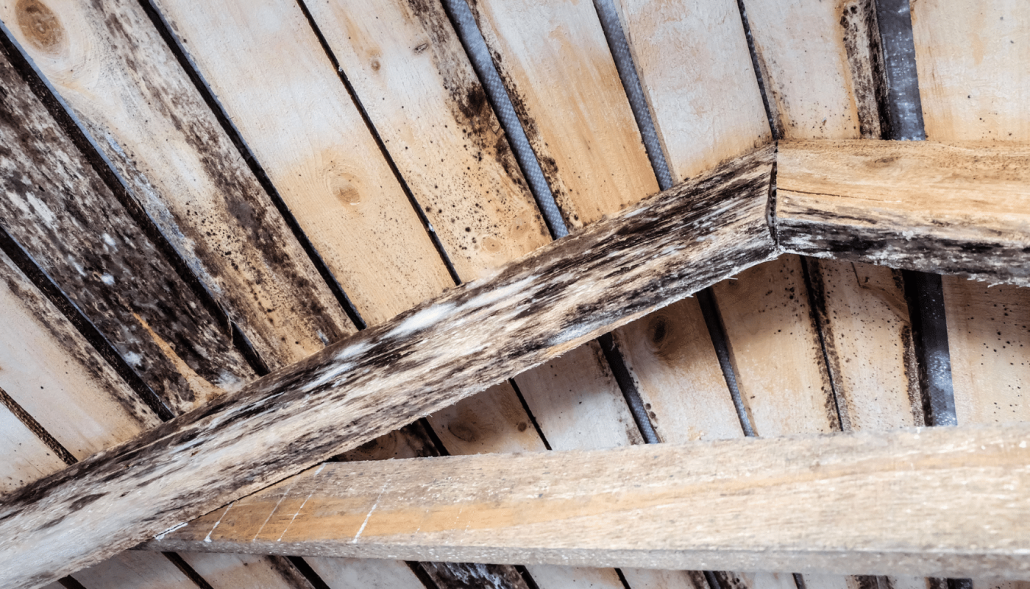
If you’ve recently climbed into your attic and noticed dark staining on the sheathing, a musty smell, or visible fuzzy growth on the wood surfaces, you’re not alone. Attic mold is one of the most common — and most misunderstood — problems facing homeowners in Ottawa and the surrounding region. The good news is that understanding why it happens is the first step toward fixing it properly.
Ottawa’s Climate and Your Attic: A Perfect Storm
Ottawa experiences some of the most dramatic seasonal swings in Canada. Winters are long and bitterly cold, summers are humid and warm, and everything in between creates constant shifts in temperature and moisture inside your home.
Your attic sits right at the boundary between your heated living space and the outdoor elements. When warm, moist air from inside your home rises and meets the cold underside of your roof deck, condensation forms — and that trapped moisture is exactly what mold needs to grow.
This isn’t unique to older homes in neighbourhoods like Barrhaven or Kanata. Even newer construction in communities like Orléans or Stittsville can develop attic mold if ventilation or insulation isn’t properly balanced.
The Most Common Causes of Attic Mold
1. Inadequate Ventilation
This is the leading cause of attic mold in Ottawa homes. Your attic needs a steady flow of air to carry moisture out and regulate temperature. When soffit vents are blocked by insulation, or when ridge vents are insufficient for the attic’s size, that moisture has nowhere to go.
Signs your attic ventilation may be compromised:
- Ice dams forming along your roofline in winter
- Frost buildup on the underside of the roof sheathing
- Uneven heating or cooling in the top floor of your home
2. Bathroom, Kitchen, or Laundry Exhaust Venting Directly Into the Attic
This is a code violation — but it’s still surprisingly common, particularly in older homes throughout the Glebe, Westboro, and Hintonburg. Exhaust fans are designed to push warm, humid air out of your home. When they vent into the attic instead of through the roof or soffit to the exterior, they dump concentrated moisture directly into your attic space, day after day.
3. Air Leaks From the Living Space Below
Small gaps around pot lights, attic hatches, plumbing stacks, and ductwork allow warm household air to escape into the attic continuously. Over an Ottawa winter, this adds up to enormous amounts of moisture being deposited in a space that may not be equipped to handle it.
A poorly sealed attic hatch alone can be enough to trigger mold growth, especially if it opens into a high-humidity area like a bathroom hallway.
4. Roof Leaks or Ice Dam Damage
Water intrusion from a failing roof or from ice dams backing up under shingles introduces liquid moisture directly onto your roof deck and rafters. Even a slow, intermittent leak creates the persistently damp conditions mold thrives in. Ottawa’s freeze-thaw cycles through March and April are particularly hard on roofing systems and can accelerate this kind of damage.
5. Insufficient or Improperly Installed Insulation
Insulation that is compressed, missing, or installed without an adequate vapour barrier can allow warm air to reach cold surfaces and condense. Getting the balance right between insulation value and attic air circulation is critical — too little insulation and your attic is too cold; too much improperly installed and you’ve blocked the airflow needed to dry things out.
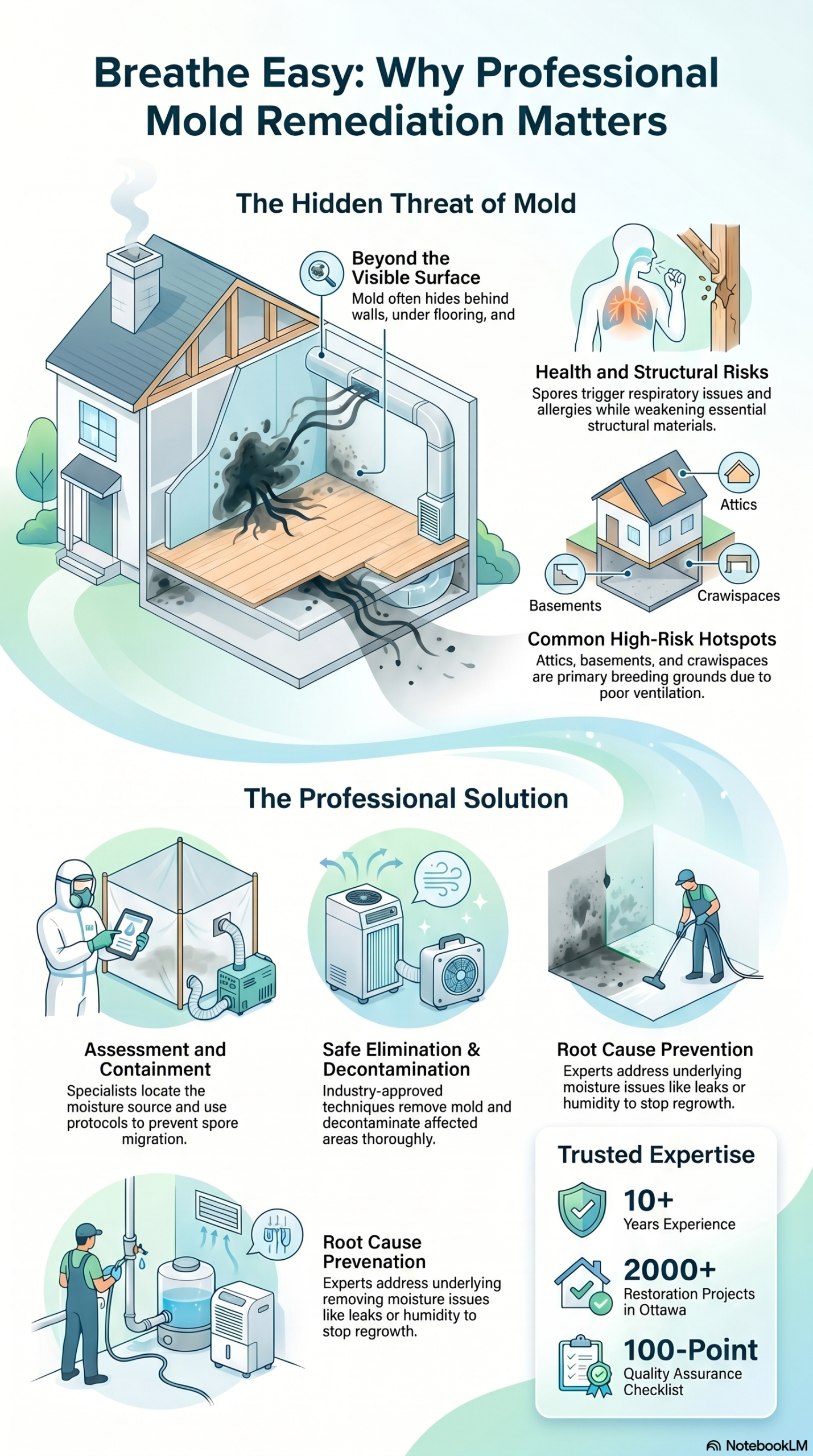
Is Attic Mold Dangerous?
The short answer: it depends on the type and extent of growth, and how your home’s air circulates.
Attic mold doesn’t always immediately affect indoor air quality — but it can, especially if:
- There are air leaks drawing attic air back down into the living space
- The mold colony is large or has been present for a long time
- Vulnerable individuals (children, elderly, or those with respiratory conditions) live in the home
Even if you aren’t experiencing health symptoms, attic mold should be treated as a structural and air quality concern. Left unaddressed, it can compromise the integrity of your roof sheathing and framing over time.
What to Do If You Find Mold in Your Attic
Do not attempt to seal over it or paint it. Surface treatments do not address the moisture source and will not stop the mold from continuing to grow underneath.
Do not disturb large mold colonies without protection. Disturbing mold can release spores into the air and spread contamination to other areas of the home.
The right approach involves three things:
- Identify and correct the moisture source — whether that’s ventilation, a misrouted exhaust fan, air sealing, or a roof repair
- Professionally remediate the existing mold — using containment, proper PPE, and approved removal techniques
- Verify conditions are resolved — so that mold does not return after remediation
How Restoration Mate Handles Attic Mold in Ottawa
When Ottawa homeowners call Restoration Mate, we don’t just treat what’s visible. Our team begins with a thorough assessment of your attic to identify the specific moisture source driving the growth — because without fixing the cause, any remediation is temporary.
Our Ottawa mold remediation process includes:
- Initial inspection and moisture assessment to confirm the extent of the problem
- Containment setup to prevent spore spread to the rest of the home
- Professional mold removal from affected wood surfaces, insulation, and sheathing
- Source correction support — including exhaust fan rerouting, air sealing, and ventilation recommendations
- Post-remediation verification to confirm the space is clear
We work directly with homeowners, property managers, and insurance providers. If your mold issue is tied to a water damage event — a roof leak, ice dam, or condensation-related claim — our team can help you navigate the documentation and restoration process from start to finish.
Frequently Asked Questions
How do I know if I have attic mold? Common signs include dark staining on roof sheathing (often black, grey, or green), a persistent musty smell near the top floor of your home, frost buildup on the underside of the roof in winter, and in some cases, increased allergy-like symptoms indoors.
Is attic mold covered by home insurance in Ontario? Typically, mold is only covered if it results directly from a sudden, accidental water event — such as a roof leak from storm damage. Mold caused by ongoing condensation or ventilation issues is generally considered a maintenance issue and may not be covered. Our team can help you understand what’s documented and what may qualify.
How long does attic mold remediation take? Most residential attic mold remediations take one to three days depending on the size of the attic and the extent of growth. We’ll give you a clear timeline after the initial assessment.
Can I stay in my home during attic mold remediation? In most cases, yes. Our containment procedures are designed to protect the living space below while work is completed in the attic. Your Restoration Mate project manager will advise you specifically based on the conditions in your home.
What happens if I ignore attic mold? Without addressing the moisture source, mold colonies will continue to grow and spread. Over time, this can lead to structural deterioration of roof sheathing and framing, reduced indoor air quality, and a more costly remediation down the road. Early intervention is always the better path.
Concerned About Mold in Your Ottawa Home?
Restoration Mate serves Ottawa and the surrounding area — including Kanata, Barrhaven, Orléans, Nepean, Gloucester, and beyond. If you’ve spotted signs of mold in your attic or aren’t sure what you’re dealing with, our team is available to help.
Call Restoration Mate Ottawa: 613-814-5503 Available 24/7 for emergency response and mold inspections.



Leave a Reply
Want to join the discussion?Feel free to contribute!